The Night Sky Is Brightening Faster Than Satellites Show
Stargazing is getting worse where you live, and it is happening faster than the scientists tracking it from satellites realized. That is the short version of a study that came out of an unusually large citizen-science project, and it matters because the fix, if there is one, starts with people noticing.
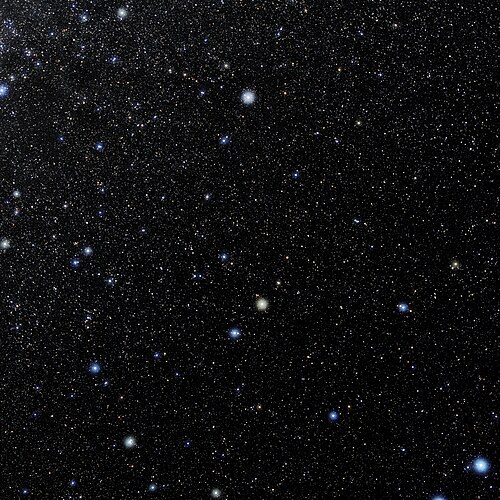
You can get a rough read on your own sky right now, tonight, with nothing but your eyes. Find Ursa Minor, the Little Dipper, in the northern sky: 7 stars in a ladle shape, anchored at the handle's end by Polaris, the North Star. Count how many of the 7 you can actually pick out without binoculars.
.jpg)
If you can only find one or two, even on a clear night, you are looking at a city sky, thick with the kind of glow that swallows anything but the brightest stars. Getting three or four is a suburban sky, better but still washed out. Seeing all seven, down to the faintest ones, means you are somewhere genuinely dark, the kind of place where the Milky Way is an obvious band overhead rather than something you have to hunt for.
What a decade of citizen science found
Between 2011 and 2022, more than 50,000 people did roughly what you just did: reported how many stars they could see against reference charts, through a project called Globe at Night. A team led by Christopher Kyba of the GFZ German Research Centre for Geosciences used those reports to measure how fast real, ground-level skies were actually changing, and published the result in Science in January 2023.
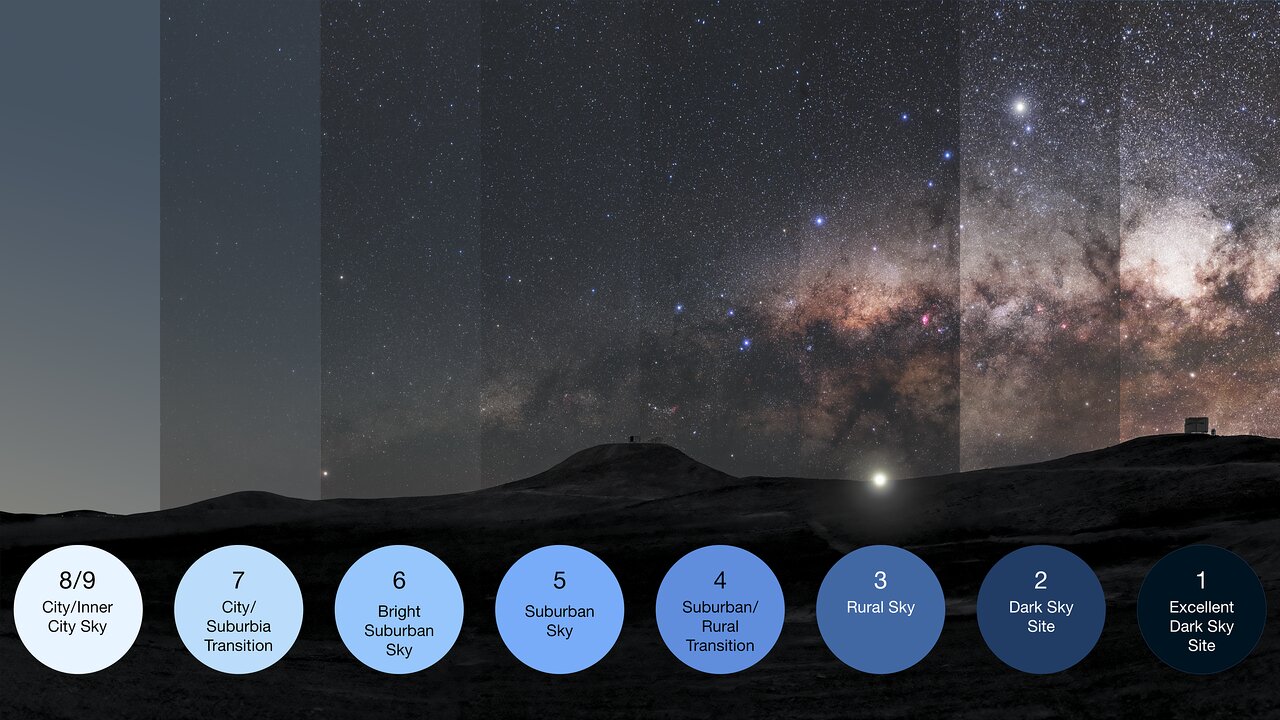
The number: about 9.6% brighter every year, on average, worldwide. Split by region, Europe came in lower at 6.5% a year, North America higher at 10.4%. The study's own way of putting that in perspective: a child born somewhere with 250 visible stars would see roughly 100 by their 18th birthday, if the local rate held steady for those 18 years.
Why the people on the ground caught something satellites missed
Satellites had already been measuring night-sky brightness from orbit for years, and their number was much smaller: roughly 2% more surface brightness per year, worldwide. The citizen-science figure came in almost five times higher, and the gap comes down to what each method can actually see.
A satellite sensor points straight down and measures light heading up. But as phys.org reported on the study, it is horizontally emitted light, building facades, signage, unshielded streetlights, that accounts for most of the skyglow a person actually experiences outdoors. That is exactly the light a downward-facing sensor in orbit is not built to catch, and exactly the light thousands of ordinary observers were standing under.
Why the sky keeps getting brighter despite efficient lighting
The obvious assumption is that switching streetlights to LEDs should have helped. Cities have been doing it for over a decade: the researchers note that LEDs' global market share of new general lighting grew from under 1% in 2011 to 47% by 2019, and LEDs use a fraction of the electricity older sodium lamps did.
Two things undercut that. First, white LEDs are blue-richer than the orange sodium lights they replaced, and your eyes, along with the atmosphere itself, are more sensitive to blue light at night, so it scatters more and contributes more to skyglow per watt. Second, cheaper-to-run lighting tends to invite more of it: extra fixtures, brighter bulbs, lights left on longer, an effect researchers sometimes call a rebound. As the GFZ team put it plainly, current lighting policy "has not yet brought about any improvement, at least on a continental level, despite growing awareness of light pollution."
What you can do with your own count
One count from one night will not tell you your local yearly rate, that took Kyba's team a decade and 50,000 observations to establish. But it gives you a real, comparable number for right now, and if you repeat it from the same spot every few months, you will start to see your own small slice of the trend documented above.
If you would rather not re-read the star-to-sky-quality descriptions above every time, our Light Pollution & Stargazing Calculator does the same lookup for you: move a slider to your star count, get back your limiting magnitude and Bortle class instantly. Same method as above, just faster to repeat.
Try the tool: Light Pollution & Stargazing Calculator